Frequently asked questions about Armco crash barriers
Key takeaways:
If you’re responsible for protecting people, vehicles, or infrastructure, you may be wondering whether an Armco crash barrier is the right solution for your site. An Armco crash barrier is a corrugated galvanised steel vehicle restraint system that was originally developed by the American Rolling Mill Company in the early 20th Century to absorb and deflect impact. It’s the ideal solution for segregating vehicles from pedestrians, and protecting buildings, plant, and critical infrastructure from low- to medium-speed vehicle impact. However, there are some alternatives to Armco crash barriers that may be better suited to your environment, so it’s important to weigh up the pros and cons of each.
Choosing the right vehicle barrier is an important consideration for any site where vehicles and pedestrians operate in close proximity. Whether you’re improving safety after a near miss, designing a new site, or trying to create clearer separation between vehicles and pedestrians in busy areas, you need a barrier that will actually reduce risk and be able to cope with everyday traffic. But with so many systems on the market, how do you determine whether an Armco crash barrier is the correct solution for your environment?
In this guide, we’re answering the key questions that end users typically ask us about Armco crash barriers, so you can make the right decision for your site.
What are Armco barriers?
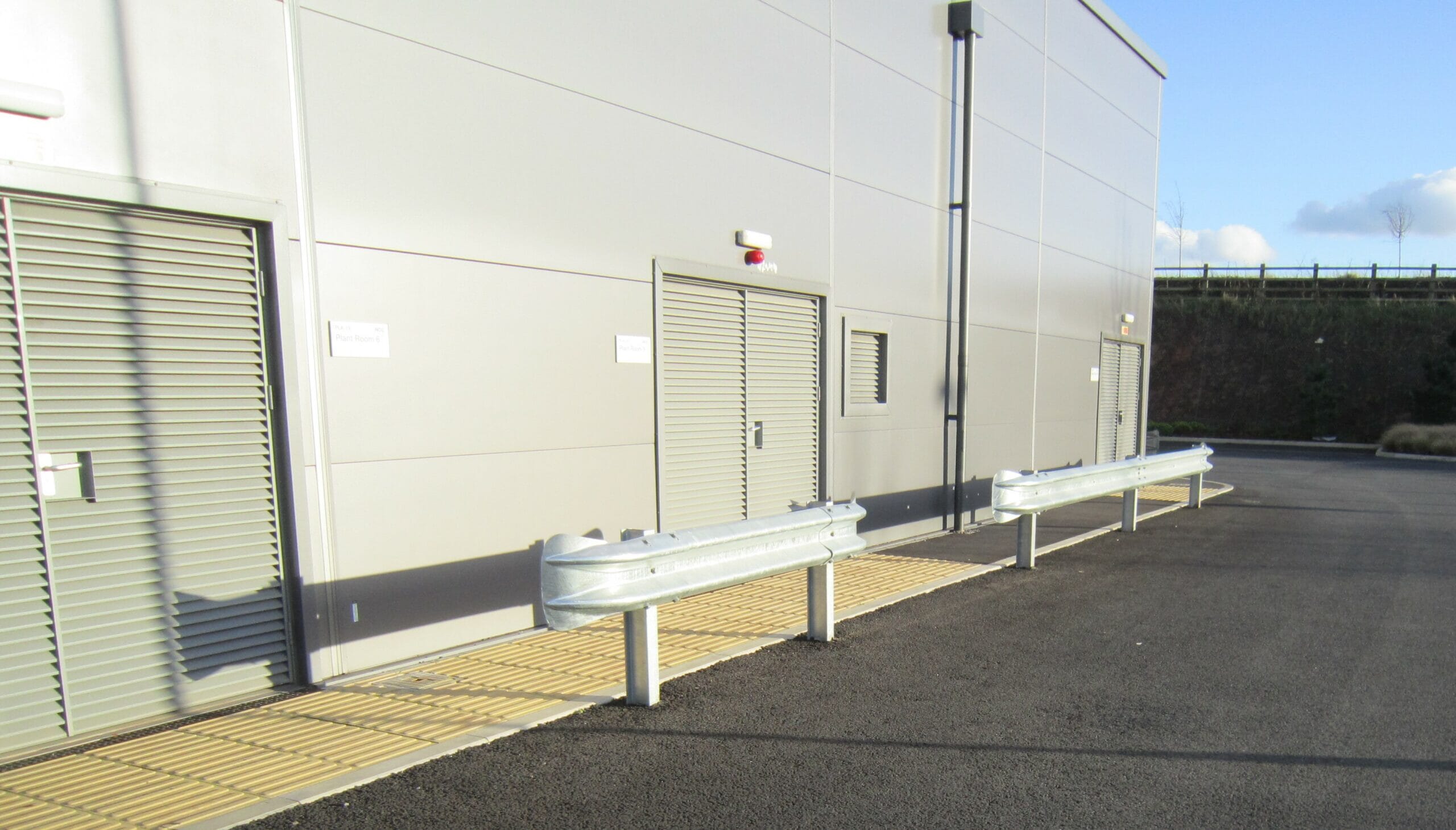
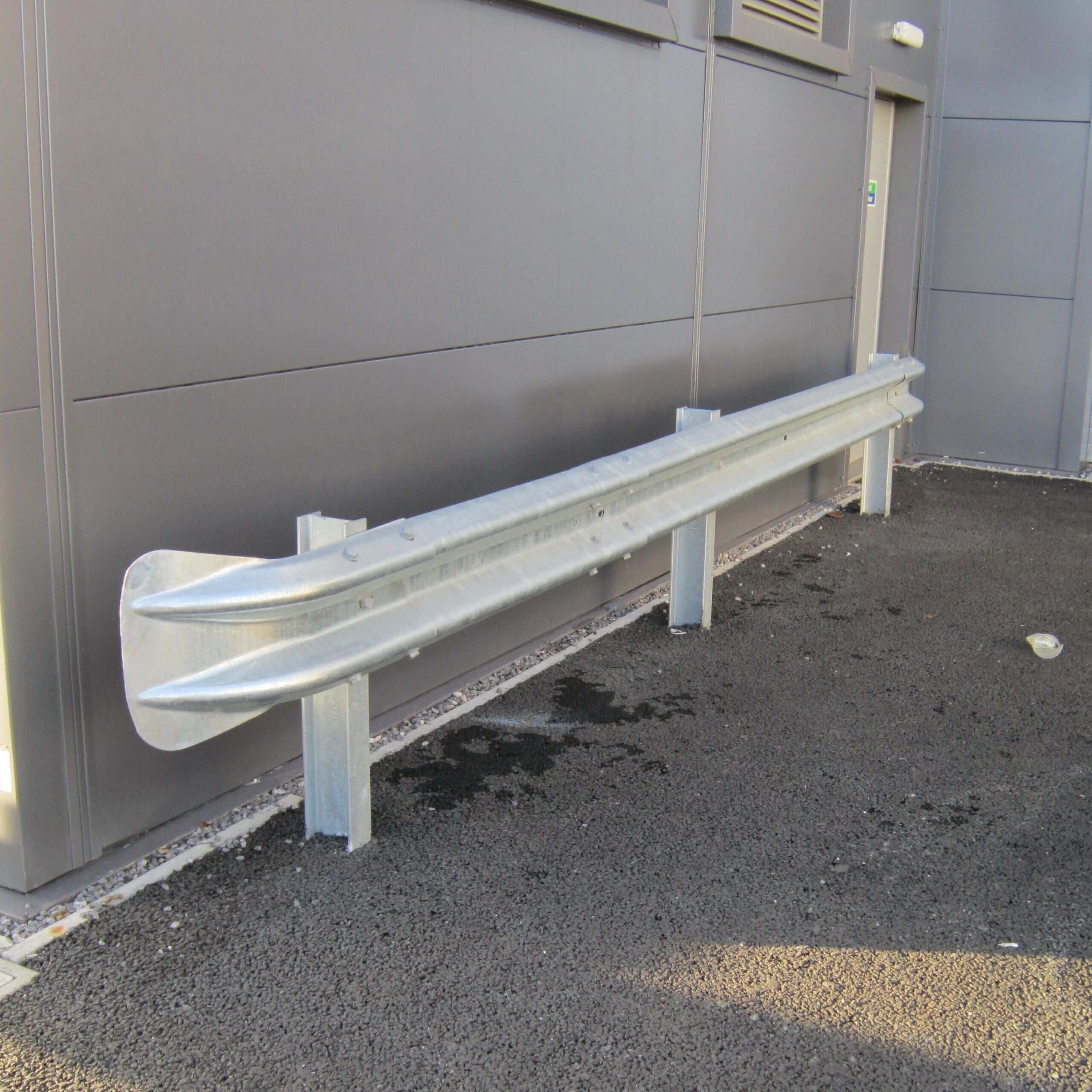
An Armco barrier is a steel crash protection system that’s designed to absorb and deflect impact from vehicles. The system typically consists of corrugated galvanised steel rails (also known as W-beam sections) that are fixed to steel posts set into the ground.
Their primary function is to prevent vehicles from colliding with pedestrians, plant, buildings, or other hazardous areas. The corrugated profile helps to distribute the impact forces across the entire length of the barrier, in turn reducing the severity of collision damage.
Why is it called Armco?
Armco was originally a brand name derived from the American Rolling Mill Company, who developed the product in the early 20th Century. “Armco” is now a generic industry term that’s used to describe steel W-beam crash barriers, regardless of who the manufacturer is.
So, when people refer to an Armco crash barrier, they’re usually talking about a galvanised steel crash protection that’s been constructed from corrugated beam sections and posts.
Where are Armco barriers commonly used?
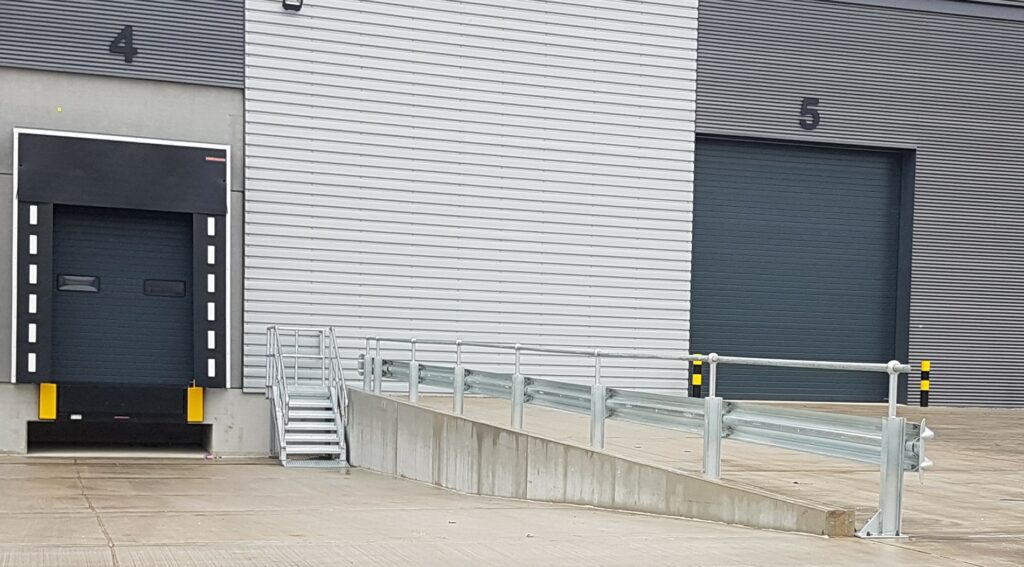
Originally developed for roadside safety, Armco crash barriers are now widely used across highways, commercial premises, and industrial sites.
Common applications include:
- Managing vehicle movement within industrial yards and warehouses
- Controlling traffic flow within distribution centres
- Segregating vehicles and pedestrians within car parks and services roads
- Improving roadside safety along highway verges and central reservations
- Reducing impact risk within loading bays and service areas
- Protecting pedestrian walkways within operational facilities
- Segregating traffic from buildings, racking, or storage areas
- Shielding critical infrastructure such as substations or plant equipment
Armco crash barriers are often chosen because they’re readily available and cost-effective for straightforward vehicle segregation across a range of industrial and roadside environments.
How strong is the Armco barrier?
Armco barriers are engineered to withstand vehicle impacts by absorbing and redistributing force. The strength of the barrier depends on several factors, including:
- How thick the steel is
- How far apart the posts are spaced
- How the barrier was installed
- The ground conditions
- The impact angle and vehicle weight
When used on highways, Armco systems are tested to ensure they meet specific performance classifications as set out in BS EN 1317-2:2010. In industrial settings, they are typically engineered to resist low- to medium-speed vehicle impacts, such as those from forklifts, vans, or cars.
It’s important to understand that Armco barriers are not rigid containment walls. They’re designed to flex and deflect upon impact, so require sufficient clearance behind the barrier. If you install your barrier too close to buildings, machinery, or walkways, this can have a significant impact on the system’s strength.
Are there alternatives to Armco barriers?
Armco barriers may not always be the best fit for every environment. You need to assess the type of vehicles, traffic frequency, impact risk, and overall site conditions before determining if an Armco barrier is suitable.
Here are some of the alternatives to Armco crash barriers:
- Modular steel railing systems – these clamp-based steel systems help to provide clear pedestrian segregation without the need for welding. They’re usually quicker to install and easier to adapt or extend than Armco barriers.
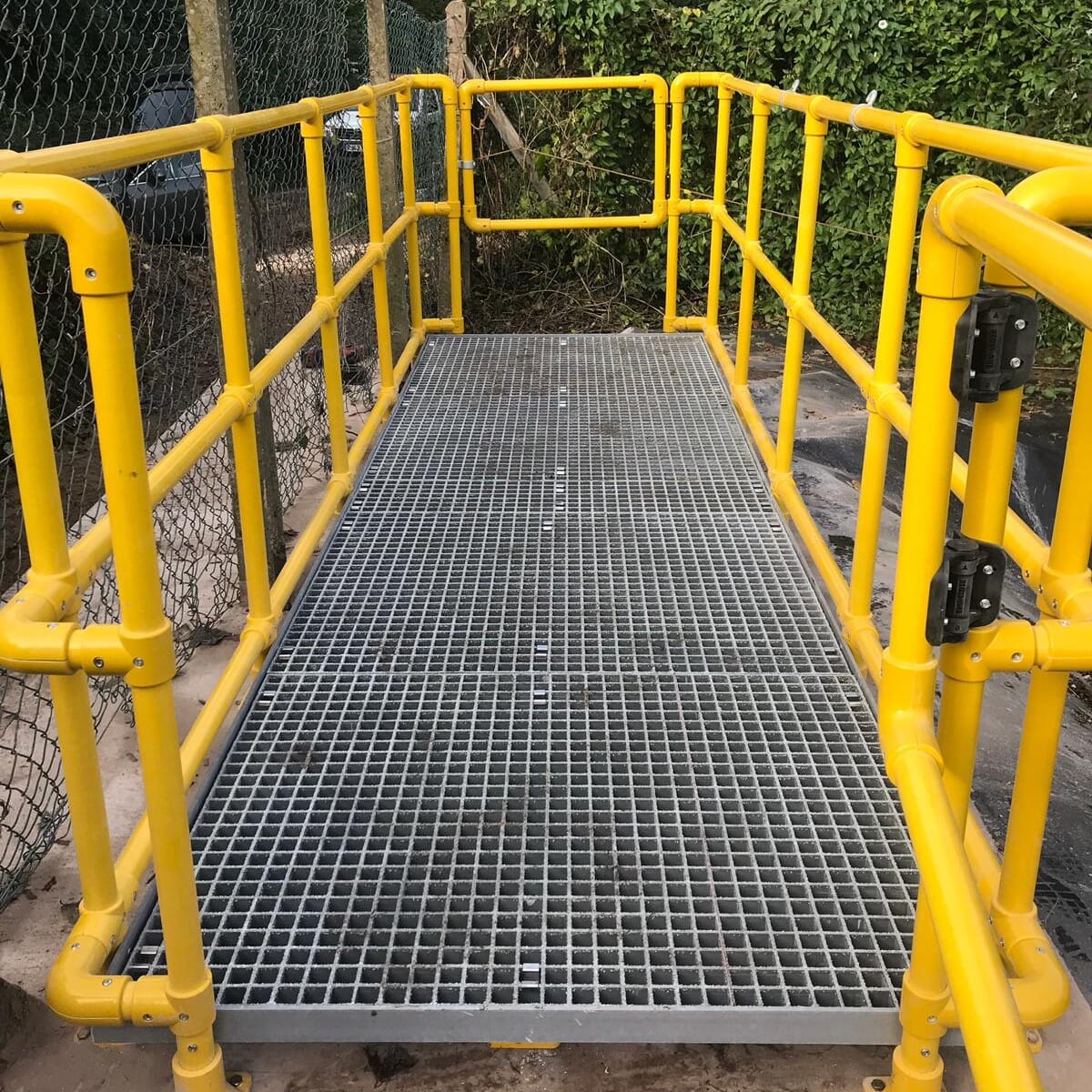
- GRP (Glass Reinforced Plastic) barrier systems – corrosion-resistant and non-conductive barriers with minimal maintenance required. They’re the ideal choice for environments that are regularly exposed to moisture or chemicals.
- Flexible impact protection barriers – these polymer-based systems are designed to absorb repeated low-speed impacts with minimal damage. They help to reduce your ongoing repair costs in areas that experience frequent forklift traffic.
- Concrete containment systems – reinforced concrete barriers that are specified for high-risk or high-speed applications in areas where minimal deflection is required.
Where can I buy an Armco crash barrier?
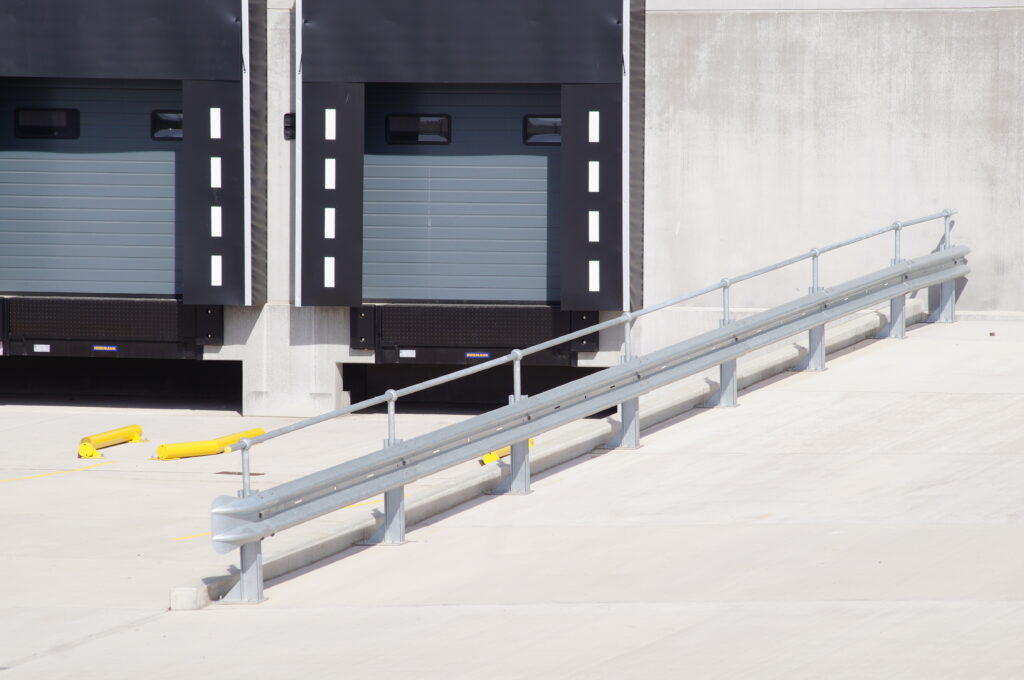
At Ezi Klamp, we supply high-quality galvanised Armco crash barrier systems that are specifically designed to help you segregate vehicles, protect pedestrians, and safeguard buildings and critical infrastructure on your site*. We supply standard beams, posts, corners, and fixings, allowing you to configure a solution that best suits your layout and impact risk.
But we don’t just supply the materials. We work with you to understand the traffic flow, vehicle types, and installation constraints on your site, so we can ensure that your Armco crash barrier is correctly specified and fit for purpose. Plus, we can even offer installation for more complex sites, if required.
Get in touch with our friendly team to begin designing the perfect Armco crash barrier system for your site.
*Please note: Our Armco barriers are designed for industrial and commercial sites and are not suitable for public highways or high‑speed road applications.

 GET YOUR ‘EZI-QUOTE’ NOW - RAPID QUOTE TURNAROUND FROM DRAWINGS



