GRP stair systems: how to specify safe, long-life access stairs
Key takeaways:
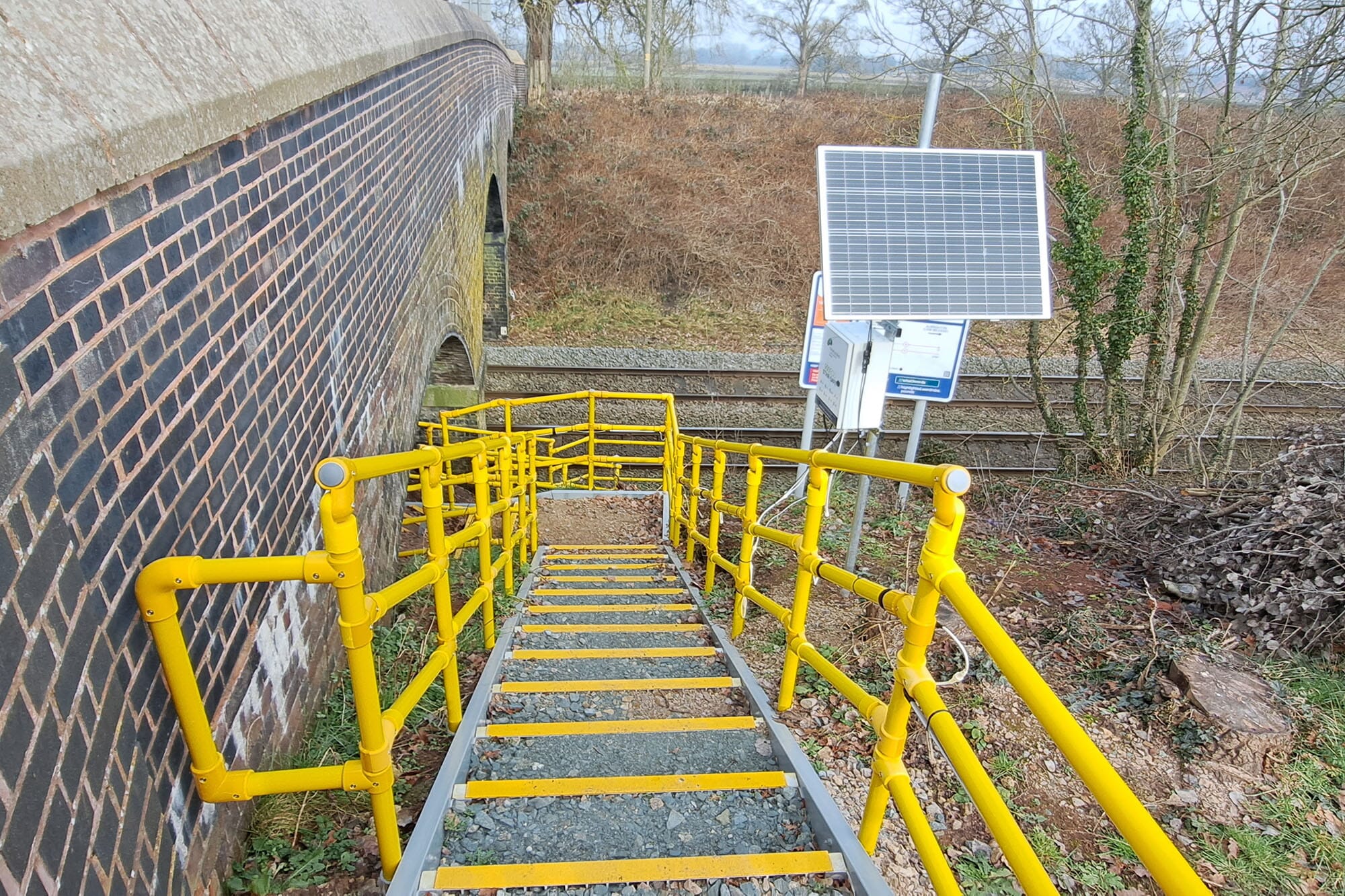
GRP stair systems offer a compelling combination of safety, durability, and cost-effectiveness for industrial and commercial environments. By carefully selecting the right riser heights, GRP stair treads, slip resistance ratings, and corrosion class, you can install industrial stair systems that will remain safe and reliable for decades – even in harsh environments.
Safe access is vital across industrial sites, utilities, infrastructure, and public environments. When access stairs are poorly designed or allowed to deteriorate, you dramatically increase the risk of slips, trips and falls, as well as facing compliance issues and costly rework. In fact, estimates suggest that there are around 100,000 accidents on public stairways in the UK each year, which highlights just how critical having the right stair design and material really is.
GRP stairs have quickly become the preferred choice, offering long-term reliability with minimal maintenance required. Here’s why so many organisations are now choosing GRP stairs for their site.
Why GRP stair systems are the ideal choice for industrial environments
Glass Reinforced Plastic (GRP) has quickly become the go-to material for industrial stair systems, offering a unique balance of strength, durability, and safety performance. It’s up to 75% lighter than steel but is still capable of bearing heavy loads, making it much easier to handle and install on-site.
Unlike steel, GRP will not rust or warp, and is highly resistant to degradation when exposed to moisture, chemicals, or salt-laden air. This makes it ideal for harsh environments like coastal locations, wastewater treatment works, processing plants, and exposed infrastructure.
Our GRP access stair systems are designed to help you comply with all relevant safety standards, offering a long lifespan of over 25 years. The modular design means they integrate seamlessly with your handrails, platforms, and walkways, giving you a flexible access solution that works across many different sites and applications.
How to specify safe, long-life access stairs
Riser and tread specification

Having the correct riser and GRP stair tread dimensions are critical to both the safety and comfort of your stair users. In the UK, stair design is typically guided by Part K of the Building Regulations and British Standards such as BS 5395-1:2010 and ISO 14122-3:2016 to help you achieve consistent, predictable step geometry and reduce the likelihood of missteps.
In industrial environments, your stairs must also cope with workwear, harsh weather conditions, and frequent foot traffic. Our GRP stairs offer consistent tread depth, clearly defined nosings, and open mesh options that allow water and debris to drain away, helping to keep your workforce safe during day-to-day tasks.
Slip resistance
According to the HSE, slips, trips, and falls are the leading cause of workplace accidents, accounting for 30% of all non-fatal injuries reported under RIDDOR in 2024/25. Slip resistance is a key factor in stair safety, particularly where stairs are exposed to water, oil, or contaminants.
Anti-slip GRP stairs like ours are widely used in challenging conditions. The GRP stair treads feature grit-bonded or moulded anti-slip surfaces that provide reliable grip, without relying on coatings that wear away. They offer consistent, dependable performance throughout their service life, with no need for regular recoating or surface treatments.
Corrosion classes and environmental performance
One of the biggest reasons why so many organisations choose GRP is because of its outstanding performance in corrosive environments. Steel stair systems often need galvanising or protective coatings, which require frequent inspection, expensive maintenance, and will eventually need to be replaced.
Because GRP is non-corrosive by nature, it can be used in demanding locations without additional protective treatments. This makes it an ideal choice for:
- Coastal and marine environments
- Water and wastewater facilities
- Chemical processing plants
- Outdoor infrastructure that’s exposed to extreme weather
By choosing GRP stairs, you significantly reduce your long-term maintenance demands and avoid the risk of hidden corrosion which could compromise the safety of your personnel.
Comparing GRP vs steel stairs
| Feature | GRP stairs | Steel stairs |
| Corrosion resistance | Will not rust, pit, or degrade, even in corrosive environments | Prone to corrosion without galvanising or protective coatings |
| Maintenance requirements | Requires minimal maintenance over its service life | Needs regular inspection, painting, and re-galvanising |
| Slip resistance | Integrated anti-slip surfaces come as standard | Relies on applied coatings that wear over time |
| Weight and installation | Lightweight and easier to handle, reducing installation time | Heavier, often requires additional lifting equipment to handle |
| Service life and whole-life cost | Long service life (25+ years) with lower whole-life cost | Shorter lifespan in harsh environments with higher lifetime costs |
Why specify Ezi Klamp GRP access stairs?
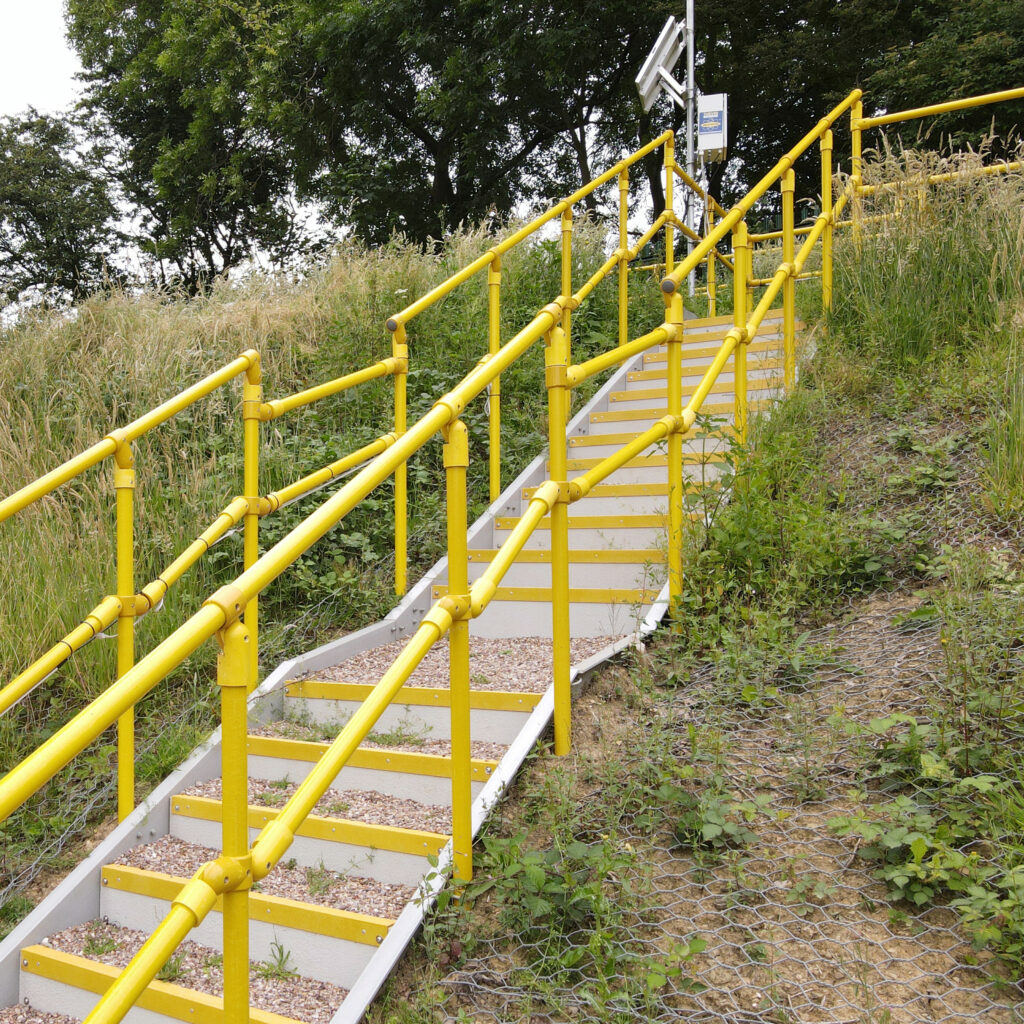
Our GRP access stair systems are designed with busy industrial sites in mind. We offer two modular solutions to suit different site conditions:
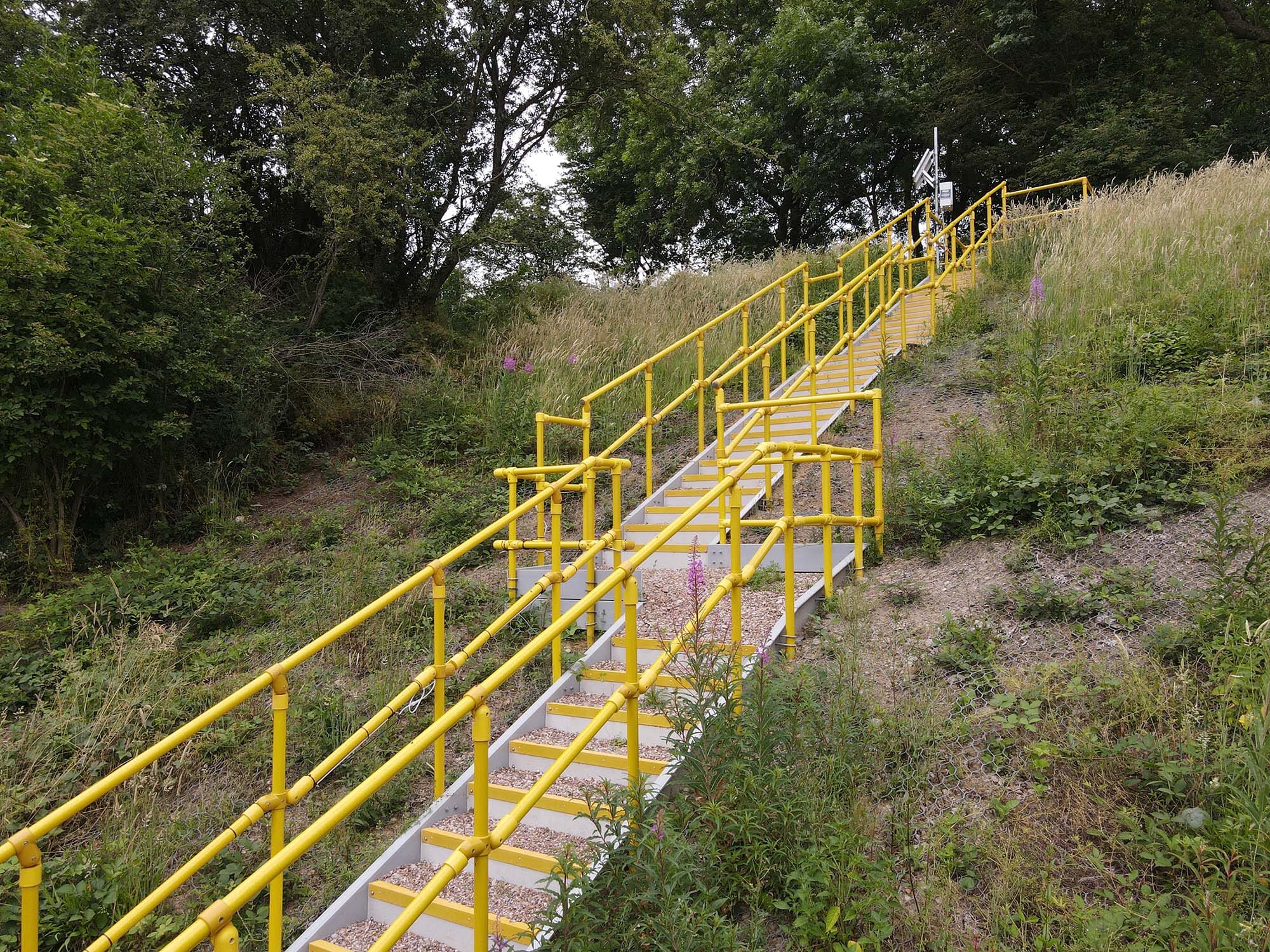
- Our GRP Mark 1 Access Stairs follow the natural slope of the ground, providing straightforward access on embankments or banks where you need a simple, non-elevated solution.
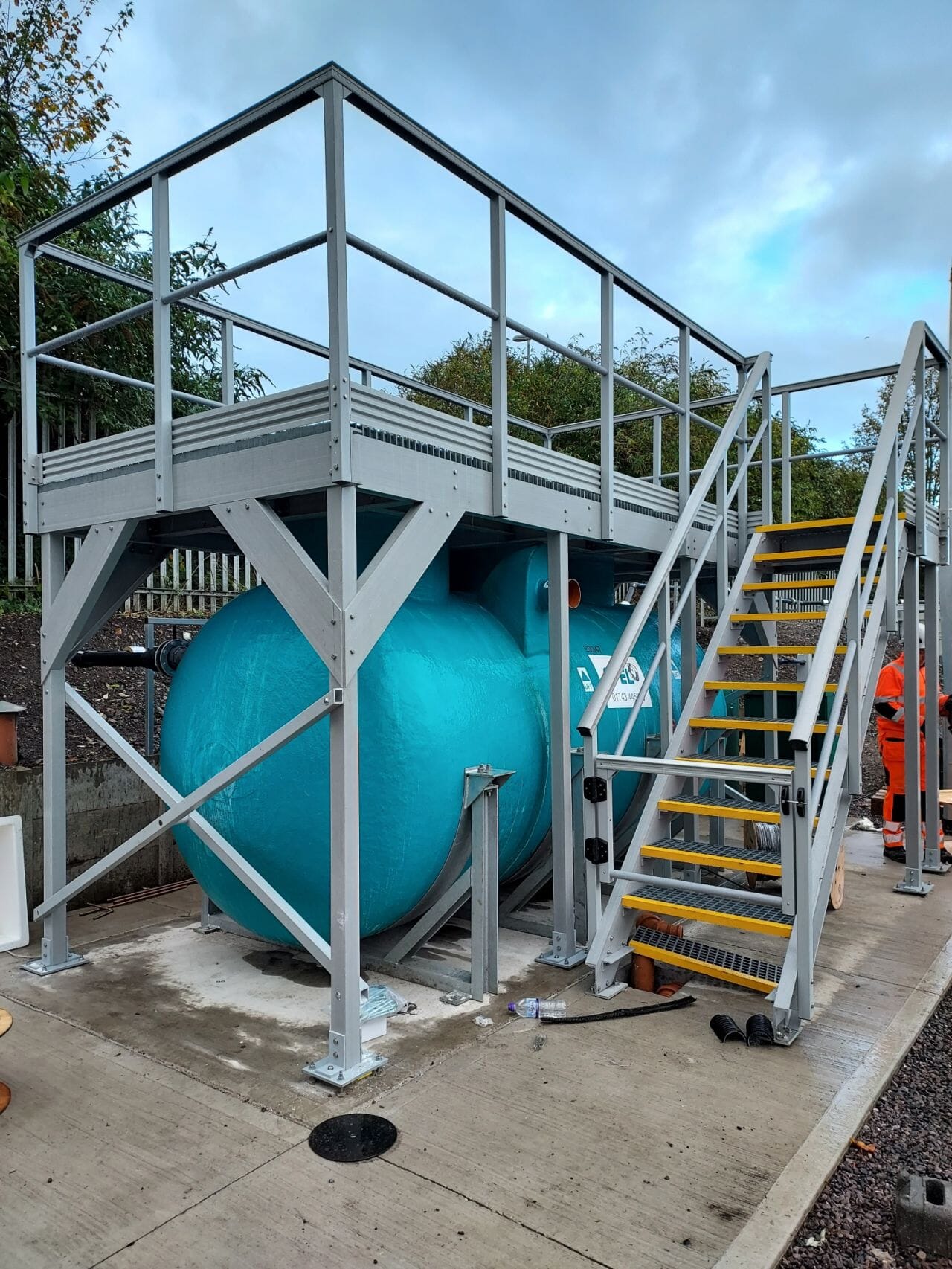
- Our GRP Mark 2 Access Stairs are a fully supported, elevated solution, and are designed for sites with unsuitable existing ground gradients that need consistent step geometry.
Both stair types are non-conductive and fire-resistant, boasting a service life of 25+ years, easy installation, and minimal maintenance requirements. The modular design means they’re fully customisable and can be specifically adapted to your site layout, making them ideal for use in demanding industrial environments.
So, are you ready to make your stairs safer to access? Get in touch with your requirements and we’ll mock up a design that suits your site.
FAQs
Are GRP stairs suitable for outdoor use?
Yes, GRP stairs are suitable for outdoor use. They’re highly resistant to UV exposure, moisture, and temperature fluctuations, making them ideal for outdoor applications.
Do GRP stair treads meet slip resistance requirements?
Ezi Klamp’s anti-slip GRP stairs feature integrated slip-resistant surfaces that are designed for long-term performance in wet and contaminated environments.
How long do GRP stairs last?
When correctly specified, GRP stair systems can last for 25+ years with minimal maintenance required, even in harsh environmental conditions.
Can GRP stairs replace existing steel stairs?
Yes, GRP stairs are often specified as a direct replacement for corroded steel systems, offering improved safety and reduced maintenance.

 GET YOUR ‘EZI-QUOTE’ NOW - RAPID QUOTE TURNAROUND FROM DRAWINGS



