A practical guide to designing EV depot access platforms

Key takeaways:
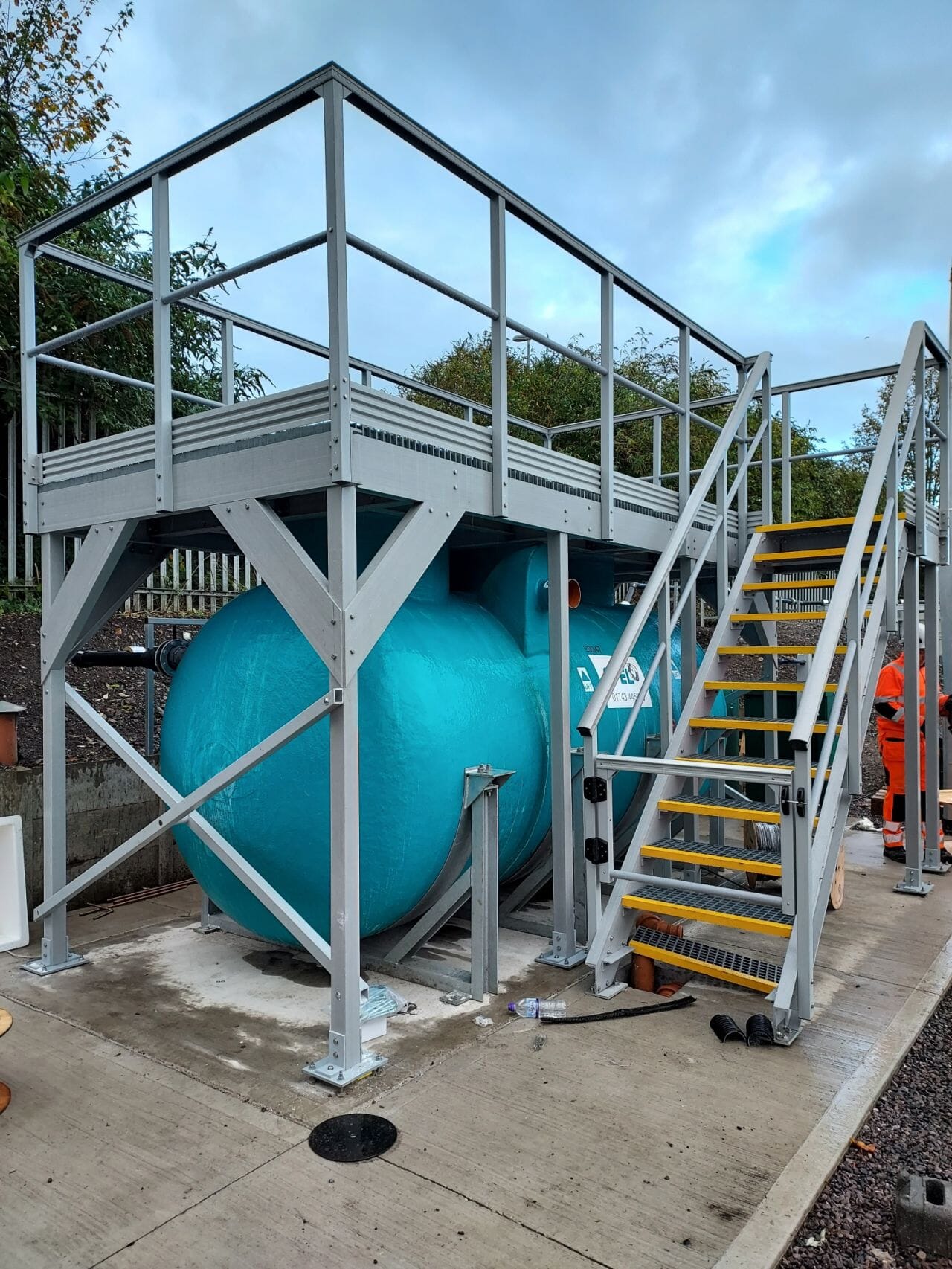
EV depots present various access and safety challenges, thanks to the high-voltage batteries, complex cable routing, and increased fire risks. EV depot access platforms made from GRP play a key role in reducing electrical risk around EV charging and battery infrastructure, offering a durable, corrosion-resistant, and low-maintenance alternative to steel. Modular GRP systems, such as Ezi Klamp’s depot access platforms, allow you to expand EV infrastructure safely and efficiently as your fleets continue to grow.
As the UK accelerates toward zero emission vehicle transition by 2035, EV depots are becoming critical pieces of national infrastructure. From bus fleets and logistics hubs to fleet maintenance centres and commercial charging depots, these sites present a unique set of access and safety challenges – so we need to start designing EV depot access platforms that are safe, compliant, and fit for the future.
In this guide, we explore the key hazards found in EV depots, explain why GRP is the material of choice for these sites, and share our expert top tips to help you design EV depot access platforms right the first time.
Understanding the key hazards found in EV depots
EV depots have a completely different risk profile compared to traditional vehicle maintenance or fuelling facilities. Here are just some of the hazards found on these sites:
- High-voltage battery systems (often 600+ volts) which increase the risk of electric shock if conductive materials are used near charging areas.
- Extensive cable routing across floors, walls, and overhead gantries, which create potential trip hazards and risk damaging critical electrical infrastructure.
- Fire risks associated with lithium-ion batteries, which require clear escape routes and the use of materials that do not increase the spread or intensity of fire.
Therefore, your access structures must be carefully designed to protect your workforce and ensure safer, more efficient EV depot operations.
Why GRP is the ideal material for EV depot access platforms
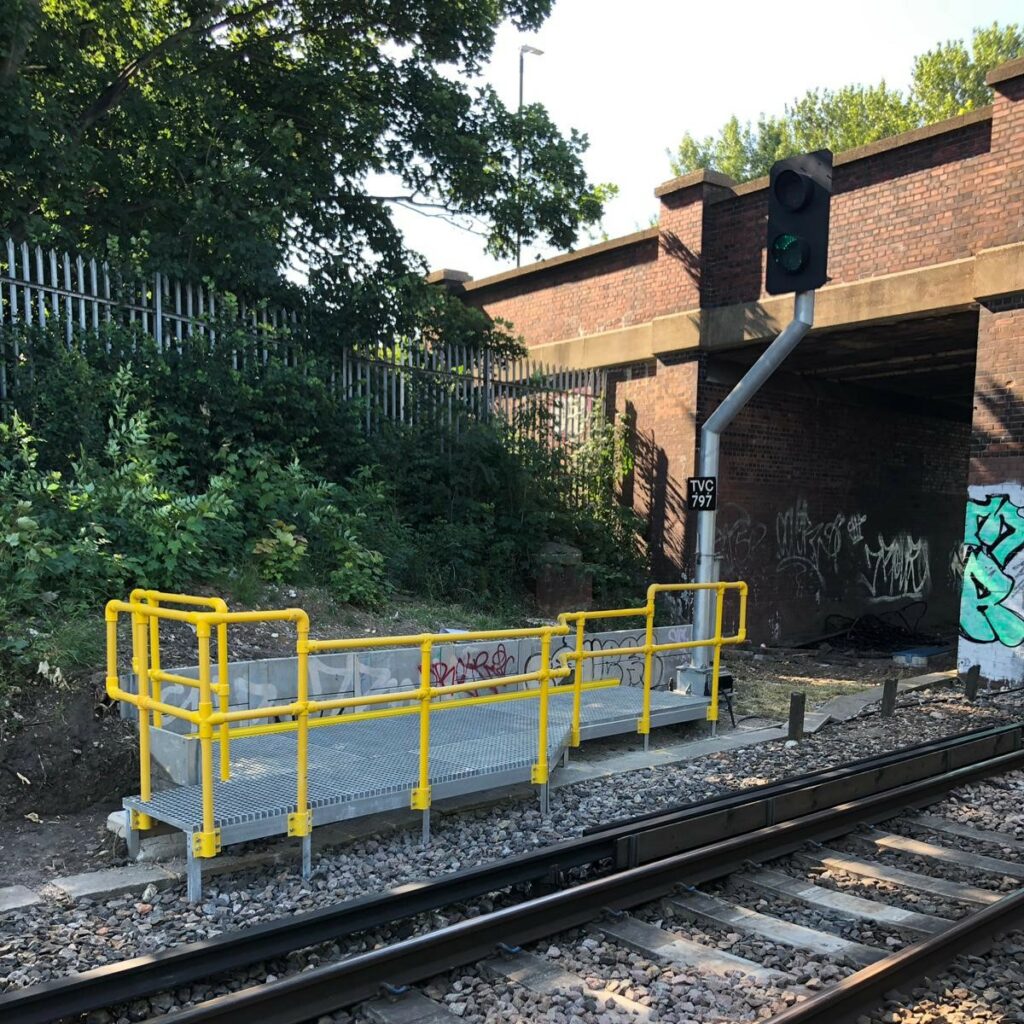
Your choice of material is critical to effectively managing EV depot risks. GRP (Glass Reinforced Plastic) has quickly become the material of choice for EV depot access platforms because it offers several key advantages:
- GRP is naturally non-conductive, helping to reduce electrical risk around high-voltage batteries and charging equipment.
- It offers excellent resistance to corrosion, moisture, chemicals, and UV exposure, making it ideal for both indoor and outdoor depot environments.
- GRP has a high strength-to-weight ratio, meaning you can easily install battery depot walkways and platforms with minimal disruption to your operations.
- Its integrated slip resistance and the option for high-visibility finishes helps to keep your workforce safe as they move around busy depot environments.
You can read more about the benefits of GRP in our dedicated blog post.
Our top tips for designing a safe battery depot walkway system
1) Maintain safe distances from high-voltage equipment
Always position your walkways at a safe distance from high-voltage batteries, chargers, and associated infrastructure. Non-conductive GRP structures help to minimise electric risk in these sensitive areas and keep personnel safe while carrying out routine maintenance tasks.
2) Clearly separate pedestrian and vehicle routes
Battery depots are busy environments, with numerous pedestrians and vehicles on site at once. Having clearly defined walkways will reduce the likelihood of collisions between pedestrians and moving vehicles, particularly around charging bays and high-traffic zones.
3) Design cable management in from the outset
Charging cables should never obstruct walkways. We recommend designing your GRP platforms to span over, route around, or protect cable runs, as this will help to reduce trip hazards and prevent damage to critical electrical systems.
4) Prioritise slip resistance and visibility
Make sure you specify integrated anti-slip surfaces and high-visibility edging as standard on all walkways. This will ensure that workers maintain safe footing in wet or low-light conditions, helping them move confidently around the depot.
5) Allow for future expansion and layout changes
Your EV depot must be able to evolve as your fleets grow. Ezi Klamp’s modular GRP access platforms allow you to reconfigure or extend your walkways with minimal disruption, rather than having to replace them entirely whenever your needs change.
Why choose Ezi Klamp for your EV depot access platforms?

Ezi Klamp supplies a wide range of GRP access solutions that are specifically engineered for safety-critical environments, including EV depots. Whether you’re designing a new depot or upgrading your existing EV infrastructure, our modular GRP platforms and structures are designed to keep your charging infrastructure, battery maintenance areas, and operational walkways safe and compliant.
All our systems use corrosion-resistant, non-conductive GRP components, providing reliable, long-lasting performance with minimal ongoing maintenance required. They’re exceptionally easy to install on site and can be quickly adapted as your fleet expands – but if your site layout is on the more complex side, we can assist with installation if required.
Contact our expert team today to discuss your EV depot access requirements in more detail.
FAQs
Why is non-conductive access important in EV depots?
Non-conductive access structures are so important in EV depots as they help to reduce the risk of electric shock when working near high-voltage batteries and charging equipment, improving overall site safety.
Can GRP access platforms be used outdoors in EV depots?
Yes, GRP access platforms can be used outdoors in EV depots. GRP is highly resistant to corrosion, moisture, and UV exposure, which makes it suitable for both indoor and outdoor depot environments.
How do GRP walkways support EV infrastructure safety?
GRP walkways support EV infrastructure safety by providing clearly defined, slip-resistant pedestrian routes that avoid electrical hazards and create safer, more reliable access to critical infrastructure.
Do EV depots have different access requirements to traditional vehicle depots?
Yes, EV depots have different access requirements to traditional vehicle depots. These depots use high-voltage batteries and complex cable routing which come with increased fire risks, so they need purpose-designed access solutions rather than standard steel platforms.


 GET YOUR ‘EZI-QUOTE’ NOW - RAPID QUOTE TURNAROUND FROM DRAWINGS



